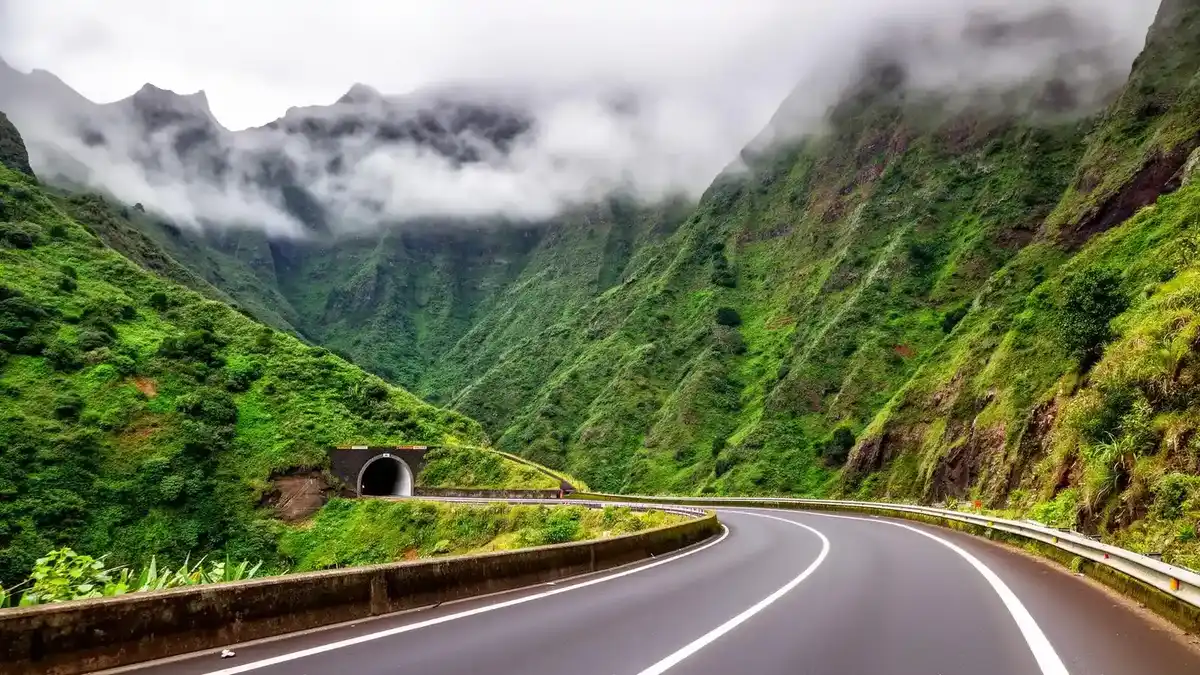
Driving in Madeira — Practical Tips, Rules & What to Expect
Search & Compare Madeira Car Rentals
Free cancellation on most vehicles
Driving in Madeira is the easiest way to reach Funchal, Câmara de Lobos, Cabo Girão, Ribeira Brava, Porto Moniz, Santana, São Vicente, Seixal, Machico, Caniçal, Ponta de São Lourenço, Calheta, Ponta do Sol, Jardim do Mar, Paul do Mar, Curral das Freiras, Eira do Serrado, Pico do Arieiro, Pico Ruivo, and the Levada trailheads for 25 Fontes, Caldeirão Verde, Levada do Rei, Vereda dos Balcões, Levada dos Tornos, and Rabaçal. In 2026, the island's main roads are modern, signed in Portuguese, and heavily tunnelled, so most rental trips stay simple if you avoid closed mountain tracks and choose the right car. For the best balance of comfort and safety, many Madeira renters pick automatic economy or compact models such as a Fiat Panda, VW Polo, Seat Ibiza, Fiat Tipo, Ford Focus, Fiat 500 Electric, Dacia Duster, Mercedes GLA200d, or Mitsubishi Eclipse PHEV.
Most car rental suppliers at Cristiano Ronaldo International Airport (FNC) operate at a terminal desk at Floor 0 Arrivals or via meet-and-greet and shuttle service, and many renters compare Rodavante, Auto Rent a Car, JustDriveMadeira, RentX, MadeiraRent, 7M Rent a Car, FunchalDrive, Car Rent Madeira, Sixt, Europcar, Hertz, Avis, Budget, Guerin, Centauro, OK Mobility, GoldCar, and Surprice before booking. Typical Madeira pricing in 2026 often starts around €22/day for an economy manual with CDW, while automatic SUVs with SCDW or zero excess commonly cost more, especially in summer. If you want one practical rule upfront, book a rental with clear excess/deductible terms, confirm whether preauthorisation applies at pickup, and avoid cars that do not explicitly cover burnt clutch exclusion if you plan to use steep mountain roads.
Is Driving in Madeira Difficult?
Driving in Madeira is manageable for most visitors, because the island's biggest roads are modern and the steepest routes are optional rather than unavoidable. The key datapoint is that roughly 70% of typical driving is done on the Via Rápida network, especially VR1 and the VE1-VE4 links, where speed, lane markings, and tunnels make route-finding straightforward. A rental with at least 90 hp is sensible for hill starts, and 110+ hp is better for long climbs to places like Encumeada, Paul da Serra, Pico do Arieiro, and Pico Ruivo. The main caveat is that older coastal roads and village shortcuts can be narrow, wet, or steep, so an automatic car is usually less stressful than a manual on Madeira.
Portuguese Driving Rules
Driving in Madeira follows Portuguese road law, and the most useful rules for tourists are the speed limits, right-hand driving, and strict seatbelt enforcement. In Madeira, urban speed is generally 50 km/h, rural roads are typically 80-90 km/h, and the Via Rápida is 100 km/h rather than the mainland 120 km/h limit; the blood alcohol limit is 0.5 g/L, or 0.2 g/L for drivers holding a licence for less than 3 years. Using a handheld phone can trigger fines of €250 to €1,250 plus 3 penalty points, and police can require on-the-spot payment from non-resident drivers using card readers. A caveat is that local enforcement can be stricter than visitors expect, so keep your rental documents, licence, and insurance confirmation in the vehicle at all times.
| Rule | Detail |
|---|---|
| Side of the Road | Drive on the right, overtake on the left. |
| Speed Limit: Urban | 50 km/h, with lower limits such as 30 km/h in some villages and residential zones. |
| Speed Limit: Rural | 80-90 km/h on many single carriageways outside built-up areas. |
| Speed Limit: Via Rápida | 100 km/h, which is lower than mainland Portugal's 120 km/h limit. |
| Blood Alcohol Limit | 0.5 g/L, or 0.2 g/L for drivers licensed for less than 3 years. |
| Mobile Phone Use | Handheld use is prohibited and can cost €250 to €1,250 plus 3 penalty points. |
| Seatbelts | Mandatory for all occupants, front and rear. |
| Child Seats | Children under 12 or under 135 cm must use an approved restraint system. |
| Required Equipment | A reflective vest and warning triangle must be in the vehicle and reachable from the cabin. |
| Roundabouts | Use the inside lane for the second or later exit; Article 14-A of the Portuguese Highway Code formalised this in 2014. |
| Priority on Narrow Roads | The vehicle travelling uphill usually has priority on very narrow lanes. |
Drivers planning a wider Portugal road trip — for example combining Madeira with a mainland Algarve stretch — should note that the rules above apply to both regions, but speed limits, fuel prices, and the highway network differ. The Algarve mainland rental guide covers the A22 toll system, parking enforcement in Lagos old town, and pickup logistics at Faro Airport.
Madeira's Roads — What to Expect
Madeira's road network combines the Via Rápida expressways with older local roads that still matter for scenic driving, hiking access, and remote villages. The main expressway network is about 140 km long, toll-free, and does not require a Via Verde transponder or vignette, which makes cross-island travel efficient in 2026. VR1 runs from Ribeira Brava through Funchal to Caniçal, while VE1, VE2, VE3, and VE4 connect key corridors including Machico, Santana, São Vicente, Porto Moniz, Calheta, Ponta do Sol, and Encumeada. The caveat is that once you leave the expressways, road widths can shrink quickly near viewpoints, levadas, and mountain interiors such as Paul da Serra and Curral das Freiras.
Via Rápida Network (Toll-Free)
The Via Rápida is Madeira's fastest and simplest road system, and the routes are the backbone of most airport-to-hotel and town-to-town transfers. VR1 is the primary corridor, VE1 links Machico with Santana, VE2 connects São Vicente and Porto Moniz, VE3 runs along the southwest side toward Calheta and Ponta do Pargo, and VE4 crosses the interior through the Encumeada tunnel between Serra d'Água and São Vicente. A caveat is that some junctions appear immediately after tunnels, so drivers should stay in the correct lane before exiting a tunnel rather than braking late at the roundabout.
| Road | Key Connection | Useful Fact |
|---|---|---|
| VR1 | Ribeira Brava → Funchal → Caniçal | Main artery, about 44 km, with 30 tunnels and 27 junctions. |
| VE1 | Machico → Santana | Useful for east-to-northeast island travel. |
| VE2 | São Vicente → Porto Moniz | Useful on the northwest coast. |
| VE3 | Ribeira Brava → Calheta → Ponta do Pargo | Useful on the southwest coast. |
| VE4 | Serra d'Água → Encumeada → São Vicente | Uses the interior corridor and the 3.1 km Encumeada tunnel. |
Tunnels
Madeira's tunnels reduce driving time dramatically, and there are roughly 150-153 tunnels across the island depending on how minor bores are counted. The longest single-bore road tunnel in Portugal is the Faial-Santana Tunnel at 3,168 metres, while the Machico-Caniçal Tunnel is the island's longest double-bore tunnel at 2,100 metres. The caveat is that GPS signal can drop inside tunnels, headlights are mandatory, and some older single-lane tunnels still rely on traffic lights and cautious courtesy beeps.
Mountain Roads
The mountain roads to viewpoints and hiking areas are paved, but they can be steep enough to punish weak engines and poor braking technique. The road to Pico do Arieiro from Funchal takes about 35-40 minutes and can reach gradients of 11%, while the access road to Curral das Freiras can climb at up to 20%. The approach to Paul da Serra is an 18.7 km climb with an average gradient of 8.4%, and the road to scenic areas around the Laurissilva forest, Rabaçal, 25 Fontes, Caldeirão Verde, Levada do Rei, and Vereda dos Balcões often involves narrow bends and weather changes. For detailed itineraries, see our routes guide. The caveat is that a 4x4 is not required for most tourist itineraries, but a Dacia Duster, Mercedes GLA200d, or Mitsubishi Eclipse PHEV can feel calmer on longer climbs than a small city car.
Fuel on Madeira
Fuel stations are concentrated around Funchal, Machico, and the south coast, while the mountain interior and Paul da Serra have no reliable fuel points. In 2026, Madeira usually has between 35 and 50 fuel stations, with brands such as Repsol, Galp, BP, and Shell, and typical fuel prices are often 15-20% lower than mainland Portugal because the island benefits from regional tax policy and outermost-region rules. As of March 2026, unleaded 95 was around €1.584 per litre and diesel around €1.513 per litre. The caveat is simple: leave Funchal with at least half a tank if you plan to drive to Pico do Arieiro, Porto Moniz, Seixal, São Vicente, or any road with long tunnel stretches.
| Fuel Type | Typical March 2026 Price |
|---|---|
| Unleaded 95 | €1.584/litre |
| Diesel | €1.513/litre |
Fuel stations usually open from 7:00 or 8:00 until 22:00 or 23:00, and 24/7 service is not consistently available. Gasolina means petrol and Gasóleo means diesel, so a wrong-fuel fill can create a costly breakdown claim, especially if your rental contract excludes damage from misfuelling. The caveat is that no insurance policy can help if the wrong fuel is added because the mistake itself is usually treated as driver error rather than collision damage.

Parking in Madeira
Parking in Madeira is generally easier than in many island destinations, but Funchal and the main trailheads can be crowded at peak hours. In Funchal, blue-zone parking (Zona Azul) usually costs about €1.00 to €1.83 per hour, is often free on Sundays, and is commonly free after 19:00 or 20:00 depending on the street; resident-only bays marked with an "M" can trigger a €60 fine. For longer stays, garages such as Almirante Reis, Santa Luzia, and Plaza Madeira are usually better value than leaving a rental car on the street overnight. The caveat is that a 2025 parking rule prohibits rental cars from being left on public streets overnight, so hotel parking or a private garage is the safer choice.
| Location | Price / Rule | Notes |
|---|---|---|
| Funchal Blue Zones | €1.00-€1.83/hour | Often free on Sundays and after 19:00-20:00. |
| Resident Bays | €60 fine risk | Bays marked "M" are for moradores only. |
| Almirante Reis Garage | €1.40/hour | Practical for central Funchal. |
| Santa Luzia Garage | €5/24h | Better for longer stays. |
| Plaza Madeira | €6.50/day | Useful for all-day city parking. |
| Pico do Arieiro Upper Lot | €4/hour, max €20 | Card payment only in many cases. See the Pico do Arieiro route for details. |
| Pico do Arieiro Lower Lot | €2/hour, max €5 | Short-stop option for drop-offs. |
| Rabaçal / 25 Fontes | Often full by 9:30 | Arrive before 9:00 for best odds. |
| Balcões Trailhead | About 15 spaces | Small lot, fills quickly. |
| Cabo Girão | Free parking, but busy 10:00-14:00 | Tour buses can block spaces. |
Parking apps such as Via Verde Estacionar, Telpark, and EasyPark are widely used, and they are useful if you are moving between Funchal, Câmara de Lobos, Calheta, Ponta do Sol, and Jardim do Mar in one day. The caveat is that digital parking is still dependent on mobile signal, so carry coins or a payment card as a backup.
Parking at your accommodation matters as much as parking in town. Before booking, ask whether the space is private, reserved and large enough for your car; our guide to where to stay in Madeira with a car compares 14 bases by drive time and lists the parking question for each.
Common Driving Hazards
Madeira is safe to drive for most visitors, but the island's climate and terrain create hazards that do not exist on flatter mainland roads. Rockfall is more likely after rain on the north coast near Seixal, wet moss can make shaded roads as slippery as black ice, and waterfalls sometimes run directly over stretches of the old ER101. Sudden fog is common at altitude, especially on Paul da Serra, where fog can appear in minutes and visibility can drop sharply. The caveat is that local caution is always better than speed, especially near blind curves, tour coaches, and cattle that may roam near the road on the plateau.

Practical Driving Tips
Driving in Madeira becomes much easier if you prepare for weak signal, steep roads, and local enforcement before you leave the airport. Download offline maps before driving away from Cristiano Ronaldo International Airport (FNC), because tunnels, valleys, and mountain roads can interrupt navigation across the island. Carry your rental agreement, licence, and insurance certificate in the car, and confirm whether your policy includes CDW, SCDW, FDW, zero excess, or full coverage, because many suppliers still hold a preauthorisation on the card at pickup and may apply an excess/deductible or franchise if damage occurs. The caveat is that you should never drive on unpaved roads or closed roads, because rental insurance usually excludes off-road use and can also exclude burnt clutch damage.
| Practical Item | Why It Matters | Example |
|---|---|---|
| Offline Maps | Signal can fail in tunnels and valleys. | Download the island before leaving FNC. |
| Emergency Number | EU-wide emergency line works in Madeira. | Call 112 for police, ambulance, or fire. |
| Via Rápida Assistance | Road operator support is available. | Call 800 290 290 for expressway issues. |
| Insurance Check | Coverage terms differ by supplier. | Confirm CDW, SCDW, FDW, zero excess, and preauthorisation at pickup. |
| Road Use Limits | Closed or unpaved roads can void cover. | Stay on paved, open roads only. |
Car Rental Insurance and Pickup at FNC
Car rental pickup at Cristiano Ronaldo International Airport (FNC) is usually easiest when you confirm whether the supplier uses a terminal desk at Floor 0 Arrivals or a shuttle to an off-airport depot. In 2026, many renters compare the total cost of a low headline rate with the real protection level, because a €20/day base rate can become expensive once CDW, SCDW, FDW, a reduced franchise, or zero excess is added. The data point that matters is the excess or deductible: some Madeira rental contracts hold a preauthorisation for the deposit amount, and a burnt clutch exclusion can still apply even when the car is sold as full coverage. The caveat is that full coverage is not always truly "no risk," so read the terms for tyres, glass, underbody, roof, lost keys, and clutch use before you accept the keys.
| Cover Type | What It Usually Means | Important Caveat |
|---|---|---|
| CDW | Collision damage protection with an excess/deductible. | Often excludes tyres, glass, underbody, and keys. |
| SCDW | Super collision protection that reduces the excess. | A reduced excess may still apply. |
| FDW | Full damage waiver, sometimes marketed as full coverage. | Marketing names vary by supplier and country. |
| Zero Excess | The renter pays no excess for covered damage. | Road-closure, misfuelling, and burnt clutch exclusion can still apply. |
| Franchise / Excess | The amount charged before the insurer pays. | Check whether it is held as a preauthorisation. |